
On 23 June 1950, U.N. observers inspecting the border area between North and South Korea and saw nothing amiss. In a stunning surprise just two days later on the 25th of June, the full force of the Korean People’s Army (KPA) crossed the 38th parallel and declared war on South Korea. On 27 June the U.N. Security Council authorized use of force to defend South Korea.
During June, UDT-3 LTjg George Atcheson was in Japan leading a 10-man detachment when war was declared. He and his men left for Korea immediately.
Under cover of darkness on the night of 5 August 1950, this small detachment infiltrated the Korean shoreline from the destroyer USS Diachenko (APD-123) aboard rubber inflatable boats. Their objective was to damage or destroy a railway and bridge tunnel under North Korean control near the port city of Yeosu.
BM3 Warren “Fins” Foley accompanied LTjg Atcheson as they swam through the swift current some 200 yards ahead of their boats as swimmer scouts. They climbed up a 35-foot seawall just below the target and conducted a quick reconnaissance. Seeing no one, they signaled the remainder of the team to bring the explosives ashore. Without warning, North Korean soldiers came out of the tunnel and opened fire. Foley was wounded in the ensuing gun fight and tumbled over the seawall. LTjg Atcheson lobbed hand grenades at the North Koreans to give the men time for recovery and return to Diachenko. Foley ended up with a smashed kneecap and bullet wounds in his hand and thigh. He was the first Navy casualty of the Korean War.
Additional UDT personnel quickly began arriving and were committed to a continuation of expanding new missions involving nighttime coastal demolition raids. In the words of UDT Lieutenant Ted Fielding, the UDT men were given the task because, “We were ready to do what nobody else could do, and what nobody else wanted to do.”
The Korean War became a pivotal time in UDT history, since it presented a stage for demonstrating their versatility and flexibility. If only temporary, traditional UDT doctrinal roles were greatly expanded. In addition to amphibious reconnaissance and assault beach obstacle clearance, the scope of the UDT mission now included clandestine infiltrations from the sea for the purpose of conducting raids and attacking enemy shipping and port and harbor facilities, information gathering, mine and ordnance disposal, providing cover for withdrawing friendly forces, and rescuing downed airmen. The UDT men worked in conjunction with CIA personnel, U.S. Marine Reconnaissance operators, Royal Marine Commandos, and South Korean naval commandoes.
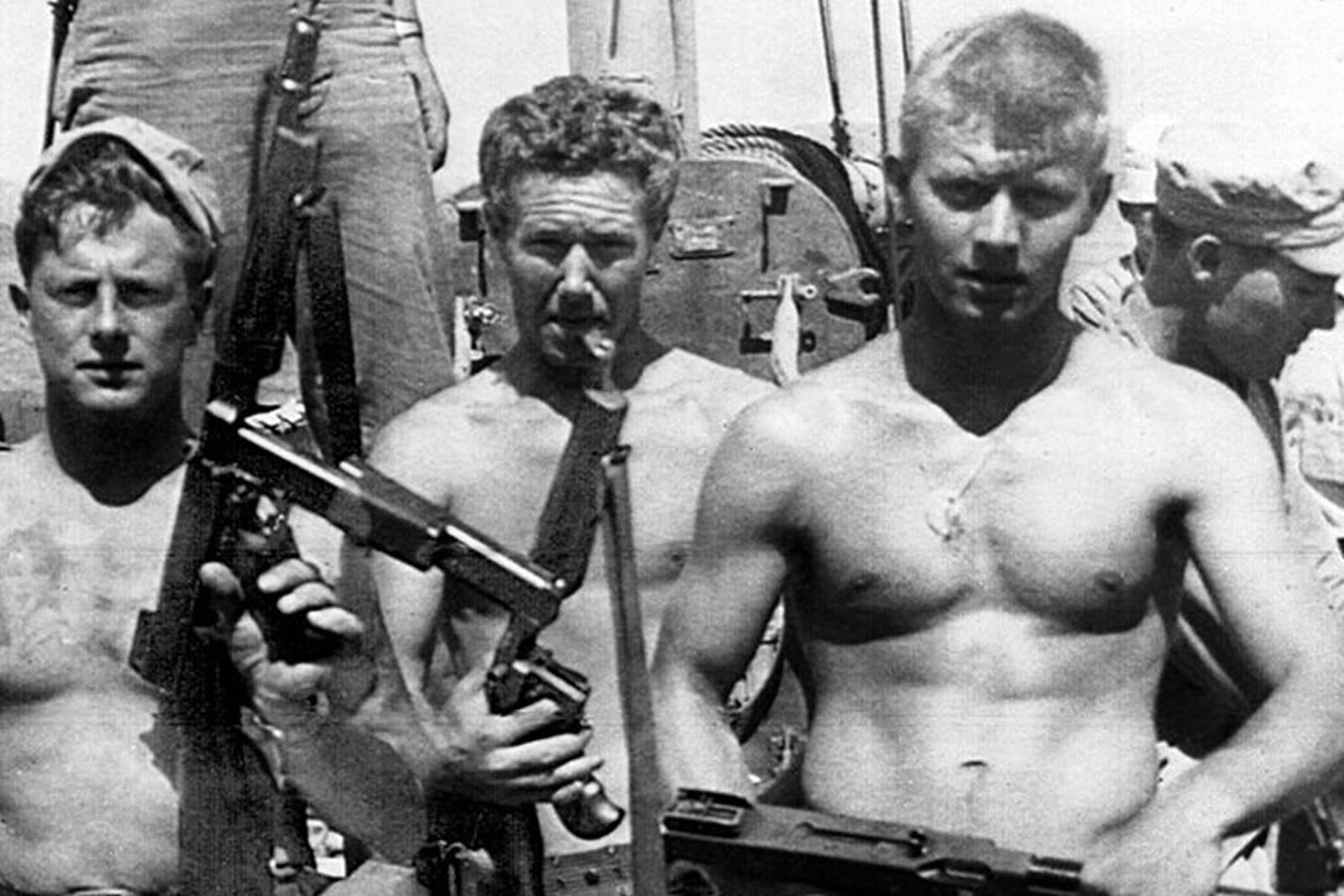
“Picture taken late afternoon on 4 August 1950 on the fantail of USS Diachenko; the day before the raid near Yeosu. The men had just finished being orientated in the operation of the Thompson Submachine gun.” BM3 Warren “Fins” Foley is seen at the left in this photo, then Phil Carrico and B. Johnson. (Photo and caption from Phil Carrico)
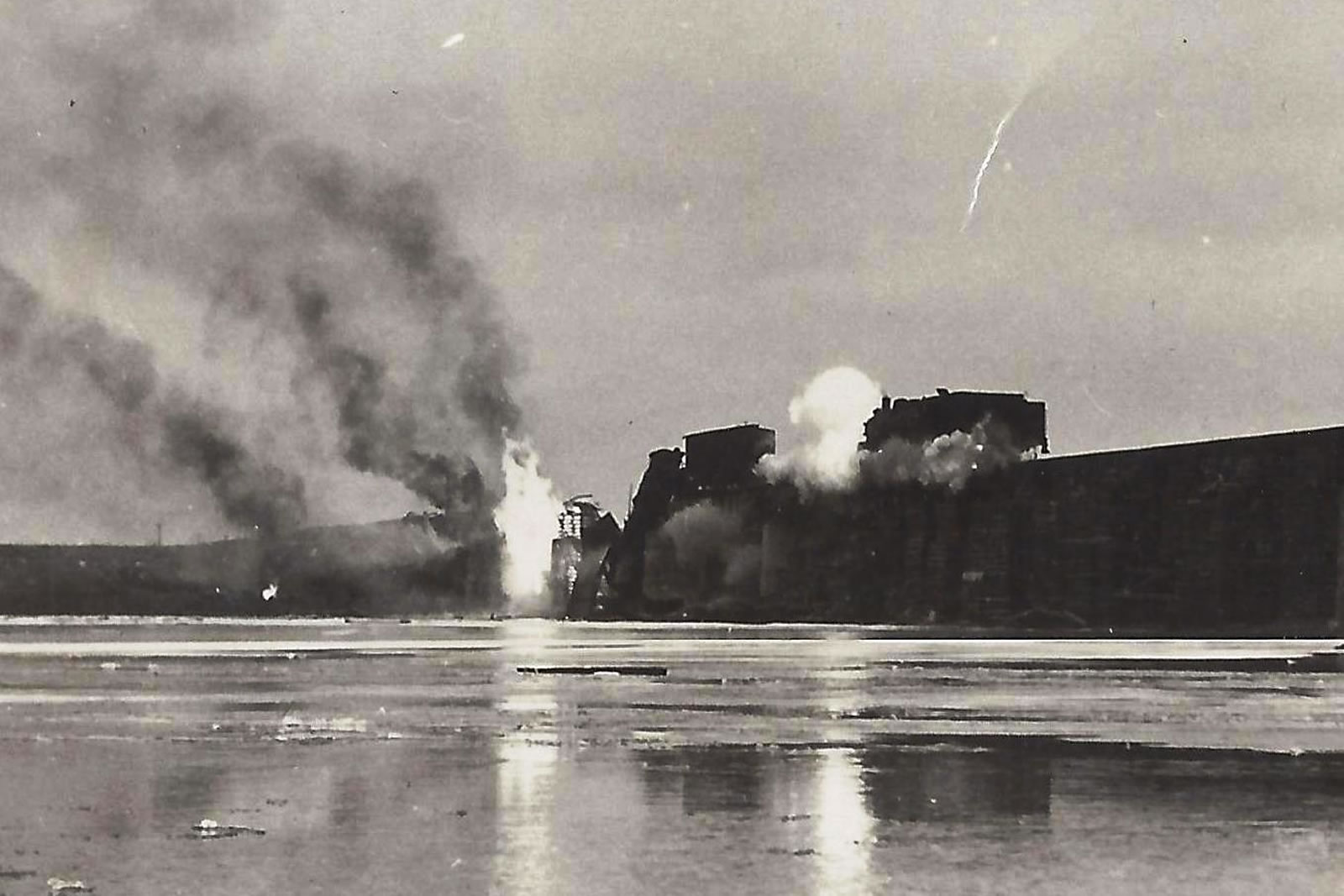
While the Yeosu tunnel operation was flawed, UDT men went on to damage or destroy many railway and tunnel lines of communication throughout the Korean War.
UDT men conducted an astonishing number of land-combat operations for which they had not been previously trained or equipped. Regardless their success, it would be quickly realized that the post-war Navy was not willing to expand the doctrinal status of the UDTs in response to Cold War realities. As far as the Amphibious Force was concerned, continued training within a World War II mission profile context was sufficient. Hence, the UDTs were never given the authority, budget, equipment, training, and means to retain or attain expanded land-focused direct-action capabilities.
Throughout the Korean War, UDT men demonstrated extreme capability and determination. Land direct actions, by their very nature, and within the context of Naval Special Warfare, really didn’t take root doctrinally until establishment of the SEAL Teams in January 1962.
Good Resources:
“Korea Remembered: Enough of War!,” by Charles F. Cole, © 1995, Yucca Tree Press, (p. 227-267).
“In the Devil’s Shadow: U.N. Special Operations During the Korean War,” by Michael Haas, © 2000, Naval Institute Press.

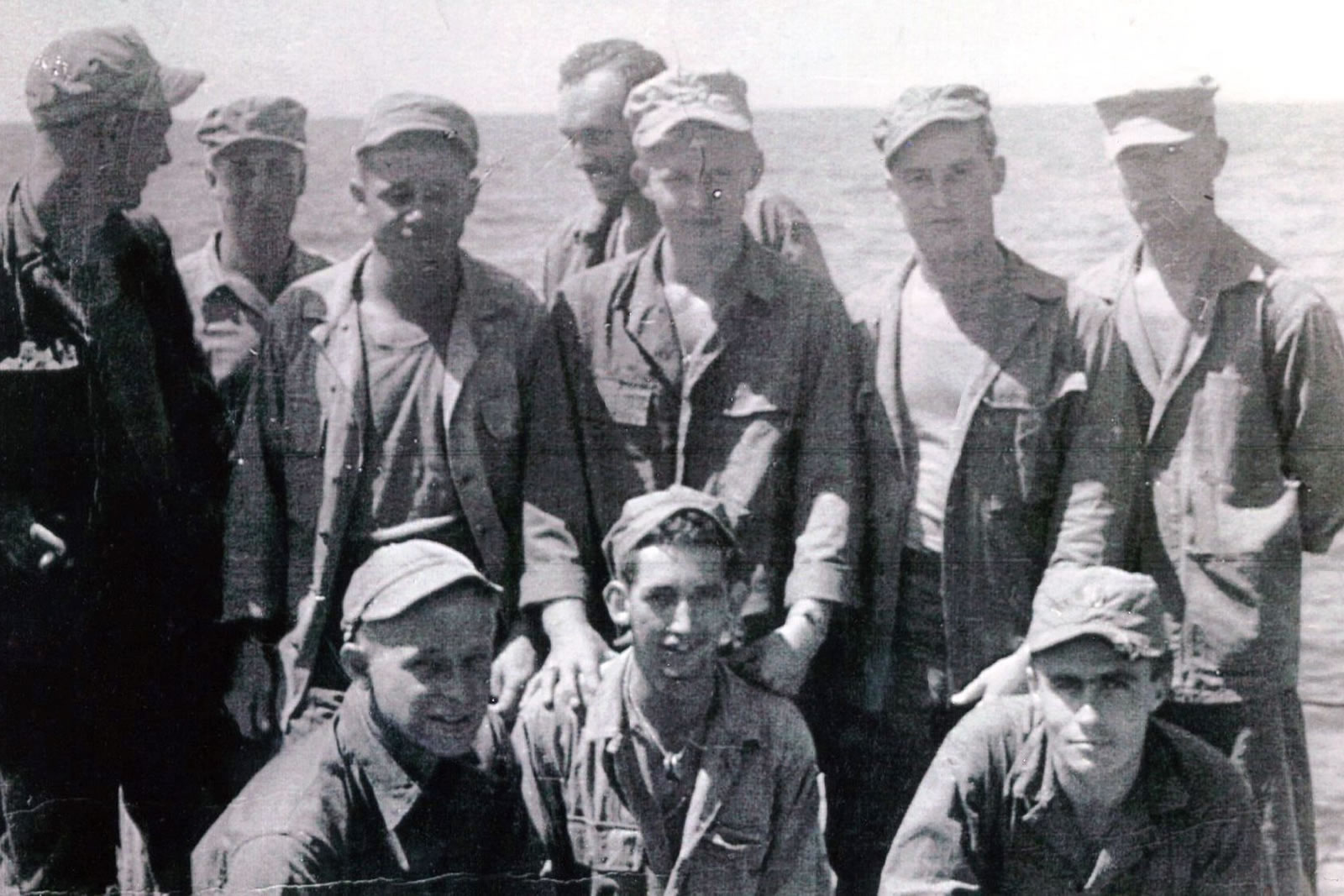
“Men being ferried to USS Dachinko.” (Photo and annotation from Phil Carrico)

On 23 June 1950, U.N. observers inspecting the border area between North and South Korea and saw nothing amiss. In a stunning surprise just two days later on the 25th of June, the full force of the Korean People’s Army (KPA) crossed the 38th parallel and declared war on South Korea. On 27 June the U.N. Security Council authorized use of force to defend South Korea.
During June, UDT-3 LTjg George Atcheson was in Japan leading a 10-man detachment when war was declared. He and his men left for Korea immediately.
Under cover of darkness on the night of 5 August 1950, this small detachment infiltrated the Korean shoreline from the destroyer USS Diachenko (APD-123) aboard rubber inflatable boats. Their objective was to damage or destroy a railway and bridge tunnel under North Korean control near the port city of Yeosu.
BM3 Warren “Fins” Foley accompanied LTjg Atcheson as they swam through the swift current some 200 yards ahead of their boats as swimmer scouts. They climbed up a 35-foot seawall just below the target and conducted a quick reconnaissance. Seeing no one, they signaled the remainder of the team to bring the explosives ashore. Without warning, North Korean soldiers came out of the tunnel and opened fire. Foley was wounded in the ensuing gun fight and tumbled over the seawall. LTjg Atcheson lobbed hand grenades at the North Koreans to give the men time for recovery and return to Diachenko. Foley ended up with a smashed kneecap and bullet wounds in his hand and thigh. He was the first Navy casualty of the Korean War.
Additional UDT personnel quickly began arriving and were committed to a continuation of expanding new missions involving nighttime coastal demolition raids. In the words of UDT Lieutenant Ted Fielding, the UDT men were given the task because, “We were ready to do what nobody else could do, and what nobody else wanted to do.”
The Korean War became a pivotal time in UDT history, since it presented a stage for demonstrating their versatility and flexibility. If only temporary, traditional UDT doctrinal roles were greatly expanded. In addition to amphibious reconnaissance and assault beach obstacle clearance, the scope of the UDT mission now included clandestine infiltrations from the sea for the purpose of conducting raids and attacking enemy shipping and port and harbor facilities, information gathering, mine and ordnance disposal, providing cover for withdrawing friendly forces, and rescuing downed airmen. The UDT men worked in conjunction with CIA personnel, U.S. Marine Reconnaissance operators, Royal Marine Commandos, and South Korean naval commandoes.
UDT men conducted an astonishing number of land-combat operations for which they had not been previously trained or equipped. Regardless their success, it would be quickly realized that the post-war Navy was not willing to expand the doctrinal status of the UDTs in response to Cold War realities. As far as the Amphibious Force was concerned, continued training within a World War II mission profile context was sufficient. Hence, the UDTs were never given the authority, budget, equipment, training, and means to retain or attain expanded land-focused direct-action capabilities.
Throughout the Korean War, UDT men demonstrated extreme capability and determination. Land direct actions, by their very nature, and within the context of Naval Special Warfare, really didn’t take root doctrinally until establishment of the SEAL Teams in January 1962.
Good Resources:
“Korea Remembered: Enough of War!,” by Charles F. Cole, © 1995, Yucca Tree Press, (p. 227-267).
“In the Devil’s Shadow: U.N. Special Operations During the Korean War,” by Michael Haas, © 2000, Naval Institute Press.
“Picture taken late afternoon on 4 August 1950 on the fantail of USS Diachenko; the day before the raid near Yeosu. The men had just finished being orientated in the operation of the Thompson Submachine gun.” BM3 Warren “Fins” Foley is seen at the left in this photo, then Phil Carrico and B. Johnson. (Photo and caption from Phil Carrico)
While the Yeosu tunnel operation was flawed, UDT men went on to damage or destroy many railway and tunnel lines of communication throughout the Korean War.
“Men being ferried to USS Dachinko.” (Photo and annotation from Phil Carrico)