Combatant Submersibles – Part I
A Photographic History: 1776 – 1945
The Navy SEAL Museum displays versions of the MK VII, MK VIII, and MK IX SEAL Delivery Vehicles (SDVs) at various locations throughout its grounds. There is a rich history behind the development and testing of combatant submersibles, particularly in the U.S. Navy and UDT and SEAL Teams.
The combatant submersible was one of the most potent weapons of war developed in the 20th century. In retrospect, it is an extremely old form of naval warfare with the first, although unsuccessful, attack being launched in 1776 in colonial America against the British. This submersible was the Turtle, designed by David Bushnell, and the unsuccessful attack was against HMS Eagle. In 1812, a British Navy boatswain, who proposed disposing of a French frigate by attaching an explosive charge to the ship’s hull, was ostracized for “a suggestion not in keeping with the highest traditions of His Majesty’s Service.”
During the Second World War, the major navies employed combatant submersibles and midget submarines. Exceptions included the United States, France, and the USSR. The absence of France is easily explained: The country’s capitulation in June 1940 effectively removed it from the war. The U.S. possessed conventional forces in abundance and, thus, didn’t feel the need to resort to this form of warfare; although some experimentation was accomplished. The absence of the Soviet Union was perplexing; however, the highly individualistic nature of combatant submersibles apparently didn’t sit easily within the centralized Soviet command structure.
The Italians and the British initiated the use of small submersibles for stealthy attacks on shipping. The Italians utilized so-called two-man “human torpedoes,” which were first employed at the beginning of World War II against the British in the Mediterranean. The British duplicated and utilized the same type of submersibles for only a short period; preceding the launching of their small submarines called X-Craft.
Italian Activities
Italy pioneered the use of the underwater swimmer as a military weapon. They concurrently developed underwater vehicles and operating procedures to transport swimmers and their explosive payloads to target enemy warships and merchantmen in their own harbors. The first Italian vehicle for swimmer use was designated the SLC (Siluro a Lenta Corsa / Slow Speed Torpedo); nicknamed “Maiale” (Italian word for Pig). Torpedo-like in general configuration, the Pig carried its explosive pay-load as one or two detachable nose sections. Maiale was used with deadly effect at Alexandria, Egypt and Gibraltar.
Decima Flottiglia Moto scafi Armati Siluranti, was an Italian commando unit of the Regia Marina. The acronym MAS translates to “speedboats armed torpedo,” which were active during World War II. The men operating the Maiali submersibles were called “Gamma” operators after the name of the Pirelli-made dry suits they wore.
Italian submarines Gondar and the Scire were converted as Maiali transporters. Three steel cylinders were installed on the submarine decks (two aft and one forward) to transport Maialis. With these watertight cylinders installed, no limit was placed on the operating depth of the transport submarine other than the limits of the submarine itself.
British Activities
It was Italian activities in the Mediterranean that spurred the British into action. Britain had traditionally made no attempt to develop this sort of weapon. The Royal Navy was the preeminent naval force in the world, thus, there was no apparent need. It was only the requirement to attack the German battleship Tirpitz that pushed a reluctant Admiralty in this direction.
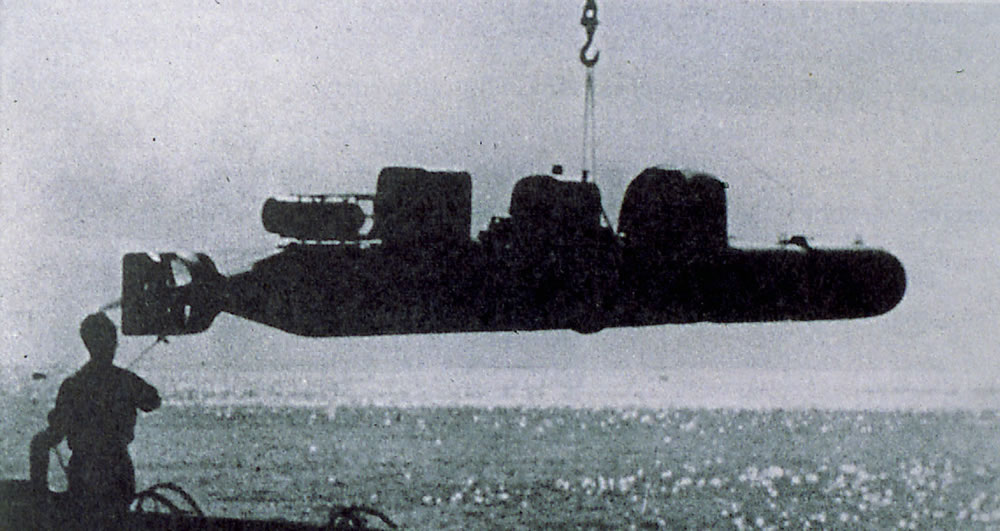
An Italian “Maiale” was salvaged by British divers after one unsuccessful Italian attack on Gibraltar. The British copied the Italian submersible and called them “Chariots.” They were developed as an interim capability, while waiting for completion the X-Craft: a miniature submarine. The British copied, improved, and added new equipment in their Chariot design; and, at a casual glance, the Italian and British submersibles looked like twins.
The Chariot was manned by a crew of two, whom, like the Italian Maiali operators, wore self-contained breathing apparatus and diving suits for thermal protection. The divers sat astride their “wet” submersible, and were exposed directly to the ambient ocean environment. Chariots could also be transported by submarines in waterproof and pressure-proof steel cylinders and extracted using a cradle and rail system. Chariot operations, however, proved unsuccessful and never justified the time and resources devoted to them.
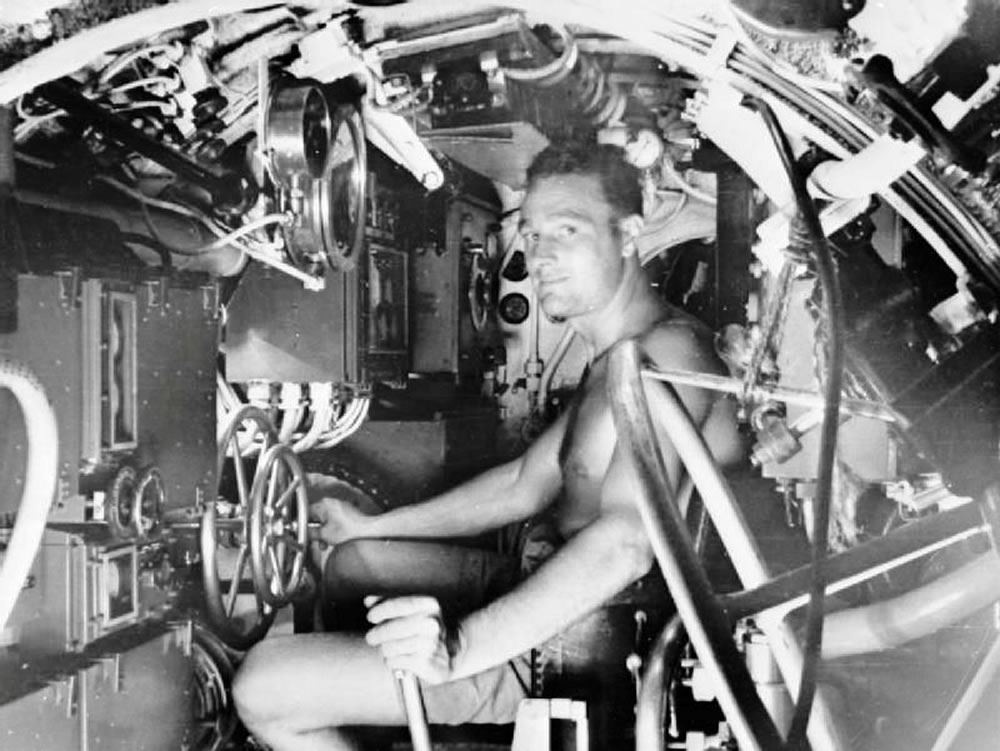
During Chariot operations, the British Navy was already producing a midget submarine: The X-Craft, which was far more successful. It was an effective four man midget submarine that could be put to a variety of uses; including “Wet and Dry (W&D)” lock-out/lock-in operations with combat swimmers. British X-Craft saw action in all three theaters of war. Their most significant success was the crippling of the German battleship Tirpitz in September 1943.
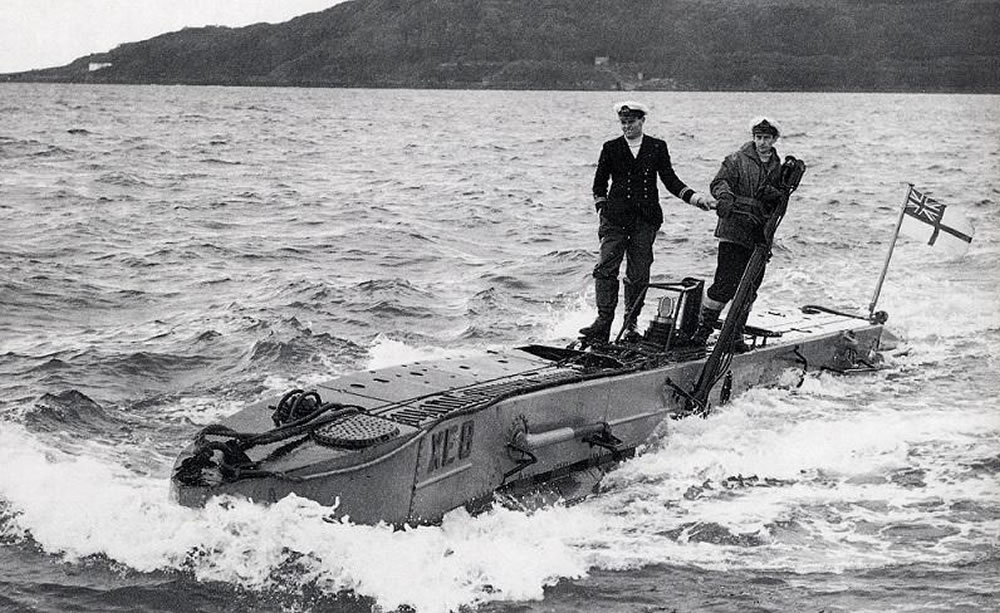
Successful operations in European and the Mediterranean waters resulted in a modified design for operations in the Far East. The result was the XE Craft (presumably the “E” was for east). The XEs were slightly increased in size to accommodate a Freon air-conditioning system, additional fresh-water capacity, air-purification equipment, and other necessary features. Six XEs were deployed to the Pacific in the later stages of the war, and a total of 12 were built or were being built at the end of the war.
Japan Activities
Japan employed Kaitens, which were essentially suicide torpedoes used extensively during the last months of World War II. Kaitens were submersible torpedoes operated by Imperial Japanese Navy sailors, who’s mission was to drive them directly into Allied and merchant shipping. Kaiten pilots didn’t allow their imminent deaths to distract from their missions. Kaitens successfully attacked USS Earl V. Johnson (DE-702) and USS Underhill. The attack on Underhill was the most successful. As recalled by crewman Harold E. Matter: “We had been hit by a Japanese suicide sub and the explosion cut the USS Underhill into two pieces. We lost 112 members of our crew that day, including the man who had replaced me as lookout minutes earlier.” During the Allied occupation of Japan, Underwater Demolition Team 18 discovered and destroyed numerous Kaiten hulls.
American Activities
In the United States, the Office of Strategic Services Maritime Unit (OSS MU) attempted to duplicate the combat swimmer-diver capability exploited by the British. OSS MU was comprised of a special-boat component and combat-swimmer component. The MU swimmer component was formed for the purpose of maritime sabotage and adopted much of the British training and tactics.
In the autumn of 1942, OSS MU tried to exploit a wet submersible they called the “Toy.” It was not a successful project; however, the significance of the experimentation was that the OSS MU divers recognized the limitations of their breathing apparatus and the need for assisted propulsion.
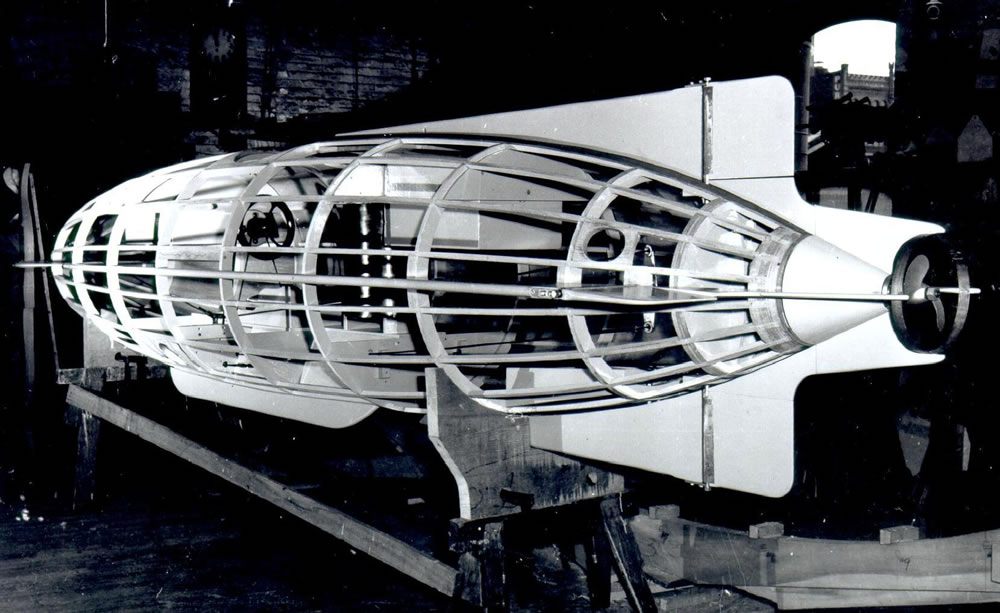
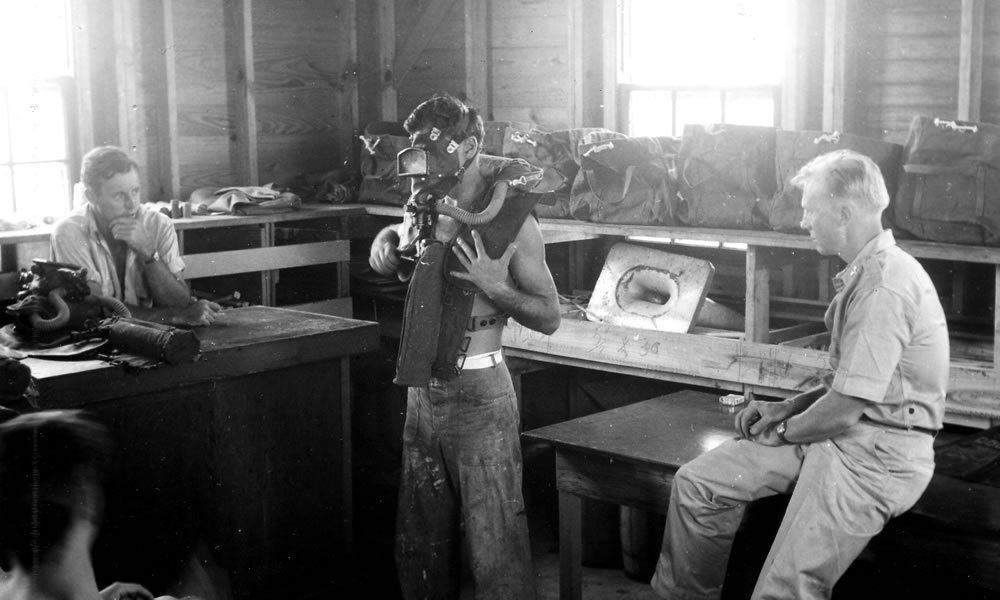
Combat-diving operations were conducted using the Lambertsen Amphibious Respiratory Unit (LARU); a pure oxygen underwater breathing apparatus designed by Dr. Chris Lambertsen, who became MU’s trainer and diving medical officer. During this same period, OSS MU acquired the British submersible “Sleeping Beauty.” It was deployed with MU swimmer groups to the Southeast Asia Theater of Operations. They trained extensively with the submersible in Ceylon, India for the anticipated invasion of the Japanese homeland. “Sleeping Beauty” was never used in combat by the British or American divers.
Operations of the various combatant submersibles and midget submarines during the Second World War remain some of the more supreme examples of cold-blooded courage in history. In a war that became dominated by technology and weapons of mass destruction, the achievements of the combat divers and midget submariners of all countries stand out, and harkened back to an earlier and more honorable age, where individual bravery was an attribute that won wars. That same courage and skills continue today in our SEAL Delivery Vehicle Teams. In conjunction with the U.S. Navy’s submarine force, the SDV Teams have attained the most formidable combatant submersible capabilities ever developed.

David Bushnell’s Turtle
Italian Siluro Lenta Corsa (SLC) slow-speed torpedo nicknamed ‘Maiale’ (Pig)

Italian Maiale SLC Mark II

American UDT men training with a Maiali at NAB, Little Creek, Virginia. The diver in the second position is Joe DeMartino.

Decima Flottiglia MAS was an Italian commando unit of the Regia Marina (Italian Navy). Their divers were called “Gamma” operators.


Waterproof and pressure-proof transport hangers aboard Scire.

British “Charioteers” maneuvering on the surface wearing thermal protection and diving breathing apparatus. (Imperial War Museum)

Chariot Mk-1 Chariot Mk-1 being hoisted aboard support ship after trials in Scotland. (Imperial War Museum)

British Chariot operator wearing green thermal-protective dress. British newspapers were the first to coin the term “Frogman.” (Imperial War Museum)
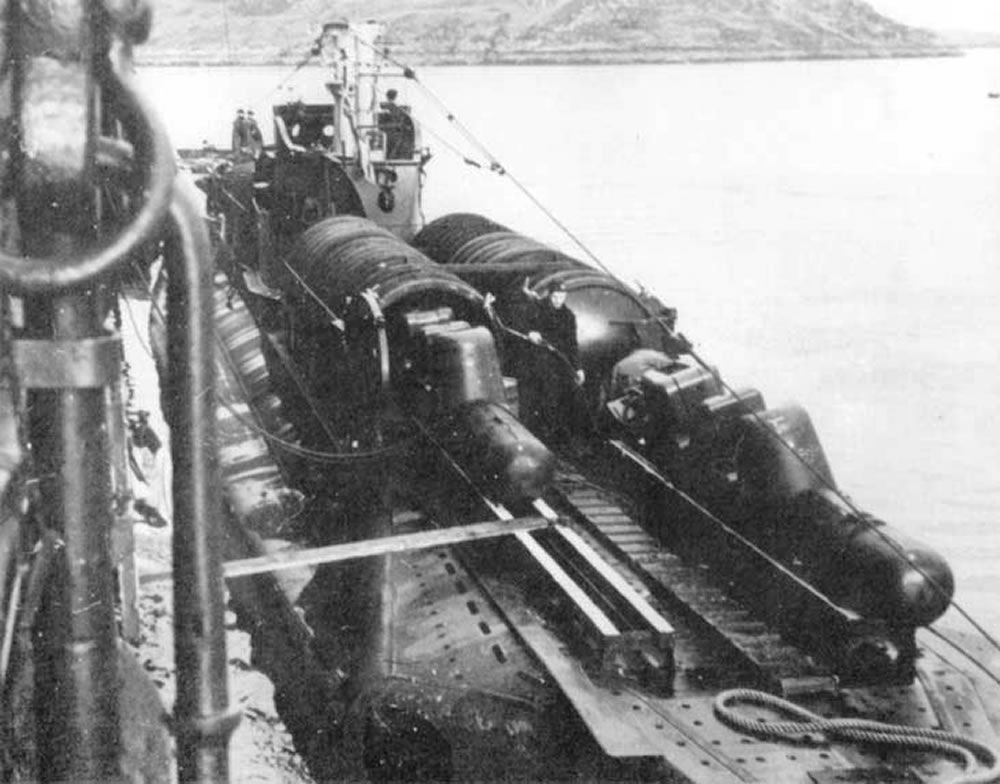
British Chariots could be transported operationally aboard installed submarine pressure-proof containers. (Imperial War Museum)