
Operation Thunderhead
The Last SEAL Team Mission of the Vietnam War
By CDR (SEAL) Tom Hawkins, USN (Ret.)
In April 1972, a UDT-SEAL Team detachment left Subic Bay in the Philippine Islands aboard the submarine USS Grayback (LPSS-574), which had been modified to support Underwater Demolition Team (UDT) and SEAL Team capabilities. Their objective was to rescue two POWs that were planning to steal a boat after escaping from the infamous “Hanoi Hilton” prison in North Vietnam and proceed to the sea. The plan was to launch two SEALs aboard a four-man MK VII Swimmer Delivery Vehicle (SDV) piloted by two UDT-11 operators. They would proceed to a small island off the mouth of the Red River, where the SEALs would establish an observation post. The Officer in Charge of the mission was Lieutenant Melvin “Spence” Dry.
Shortly after midnight on 3 June, SEALs Lieutenant Spence Dry and Chief Warrant Officer Philip “Moki” Martin and UDT SDV operators Lieutenant (j.g.) John Lutz and Fireman Thomas Edwards launched from Grayback. While underway, several navigation errors and strong currents forced the SDV off course from which they couldn’t recover. After a period of not knowing their location, and with the SDV’s batteries nearing depletion, Spence Dry decided to abort the mission and scuttle the SDV. After staying afloat throughout the night, the men were rescued by helicopter early the following morning and flown to USS Long Beach, Operation Thunderhead’s command ship.
On 5 June, the men made plans to return to Grayback by helicopter via a water drop next to the submarine. During briefings with the pilots, LT Dry and CWO Martin emphasized that the essential elements for the drop were matching altitude and airspeed, e.g., 20 knots at 20 feet or a corresponding combination (30-30). When the helicopter arrived near Grayback’s expected position, Lieutenant Dry and his scuba-equipped men prepared to jump into the water, where they would dive down to embark the submerged submarine. The helicopter crew had observed a flashing light and assumed it to be the submarine’s beacon. The pilot made a manual approach and as he reached the drop point, he called, “Drop, drop, drop.”
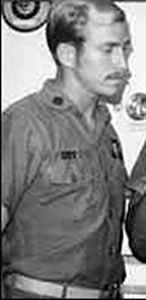
SEAL Lieutenant Spence Dry
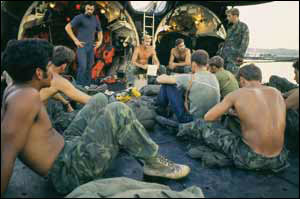
SEAL Lieutenant Spence Dry briefing his special-mission detachment aboard USS Grayback during preparation for Operation Thunderhead
According to a post-mission assessment, the helicopter indeed was too high, too fast, and downwind when approaching the drop point. As drop-master, Moki Martin related that the drop was conducted downwind, which added another 15 to 20 knots of forward speed as the men hit the water. Spence Dry was killed immediately because of “severe trauma to the neck” caused by impact with the water.
Moreover, hours earlier, Grayback had launched the second SDV to accomplish the intended surveillance mission, but the SDV was improperly ballasted and began sinking immediately. The four men bailed out, but the current was so strong that they were not able to get back aboard Grayback. While on the surface they observed a signal light and heard voices; it was the Spence Dry SDV crew and they were now joined. They subsequently found Spence Dry’s body, inflated his life vest, and towed him as they swam seaward to be rescued and return to the Long Beach.
On 12 June, the men were paddled from Long Beach back to Grayback in a rubber boat, and Operation Thunderhead was subsequently terminated. Largely because the mission was highly classified, the Navy didn’t officially acknowledge Spence Dry’s death as a combat casualty until February 2008, when he was posthumously awarded the Bronze Star Medal. He was the last SEAL to lose his life during the Vietnam War. As observed by the author Orr Kelley: “Operation Thunderhead was not one of the U.S. Navy’s finest hours, and that may help explain why it remained highly classified.”
Resources:
Hope for Freedom: Operation Thunderhead, A True Story, self-published, © 1981 by LCDR Edwin L. Towers, USN (Ret.)
Brave Men, Dark Waters: The untold story of the Navy SEALs, © 1992 by Orr Kelly, Presidio Press, Novato, CA. (Note: this book provides the most comprehensive accounting, p.151-156.)
Spence Dry: A SEAL’s Story, by Captain (SEAL) Michael G. Slattery, USN (Ret.) and Captain (SEAWOLF) Gordon I. Peterson, USN (Ret.), July 2005, U.S. Naval Institute Proceedings, Annapolis, Maryland.
Operation Thunderhead, © 2008, by Kevin Dockery, Berkley Publishing Group, New York, NY.
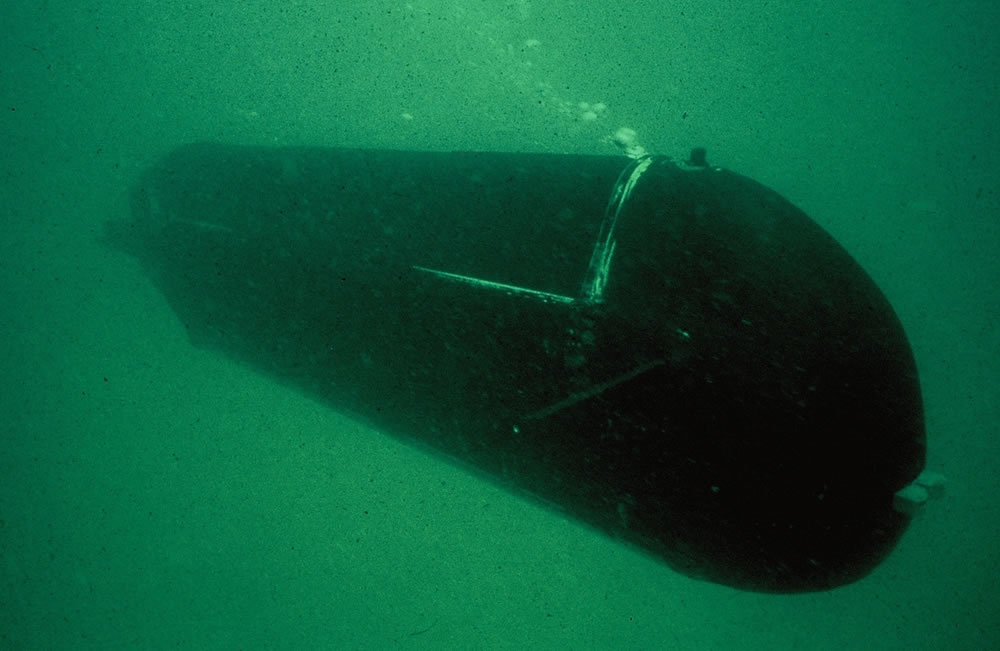
MK VII Swimmer (later SEAL) Delivery Vehicle (SDV) underway
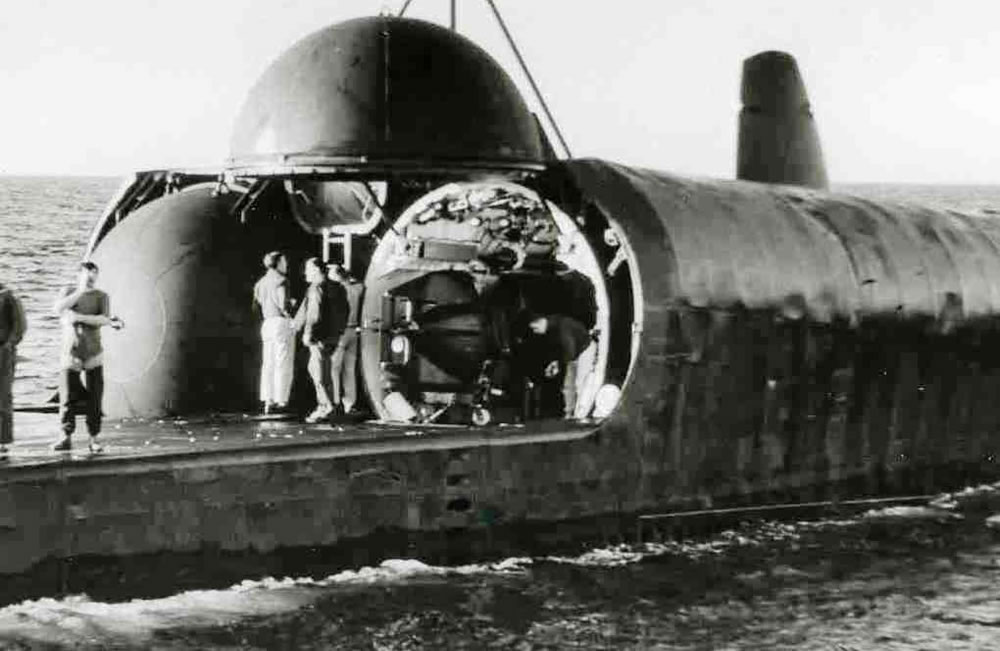
USS Grayback with starboard hangar door opened in its launching position housing a MK VII SDV
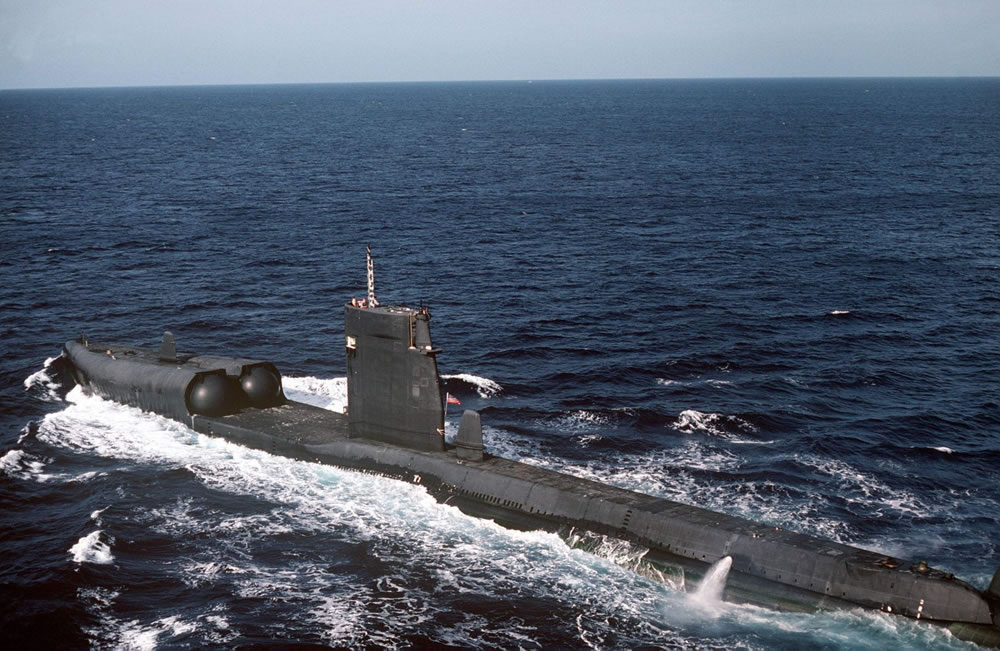
USS Grayback (LPSS-574) was commissioned in 1957 to launch Regulus missiles. Two chambers in the bow provided this capability that in 1964 became obsolete for missiles but ideal for SEAL operations. The chambers were converted in 1967 to conduct mass-swimmer lock-outs and foremost SDV operations. Grayback deployed to the Western Pacific in 1968 to support SEAL Unconventional Warfare operations until decommissioned in January 1984
Operation Thunderhead
The Last SEAL Team Mission of the Vietnam War
In April 1972, a UDT-SEAL Team detachment left Subic Bay in the Philippine Islands aboard the submarine USS Grayback (LPSS-574), which had been modified to support Underwater Demolition Team (UDT) and SEAL Team capabilities. Their objective was to rescue two POWs that were planning to steal a boat after escaping from the infamous “Hanoi Hilton” prison in North Vietnam and proceed to the sea. The plan was to launch two SEALs aboard a four-man MK VII Swimmer Delivery Vehicle (SDV) piloted by two UDT-11 operators. They would proceed to a small island off the mouth of the Red River, where the SEALs would establish an observation post. The Officer in Charge of the mission was Lieutenant Melvin “Spence” Dry.
Shortly after midnight on 3 June, SEALs Lieutenant Spence Dry and Chief Warrant Officer Philip “Moki” Martin and UDT SDV operators Lieutenant (j.g.) John Lutz and Fireman Thomas Edwards launched from Grayback. While underway, several navigation errors and strong currents forced the SDV off course from which they couldn’t recover. After a period of not knowing their location, and with the SDV’s batteries nearing depletion, Spence Dry decided to abort the mission and scuttle the SDV. After staying afloat throughout the night, the men were rescued by helicopter early the following morning and flown to USS Long Beach, Operation Thunderhead’s command ship.
On 5 June, the men made plans to return to Grayback by helicopter via a water drop next to the submarine. During briefings with the pilots, LT Dry and CWO Martin emphasized that the essential elements for the drop were matching altitude and airspeed, e.g., 20 knots at 20 feet or a corresponding combination (30-30). When the helicopter arrived near Grayback’s expected position, Lieutenant Dry and his scuba-equipped men prepared to jump into the water, where they would dive down to embark the submerged submarine. The helicopter crew had observed a flashing light and assumed it to be the submarine’s beacon. The pilot made a manual approach and as he reached the drop point, he called, “Drop, drop, drop.”
According to a post-mission assessment, the helicopter indeed was too high, too fast, and downwind when approaching the drop point. As drop-master, Moki Martin related that the drop was conducted downwind, which added another 15 to 20 knots of forward speed as the men hit the water. Spence Dry was killed immediately because of “severe trauma to the neck” caused by impact with the water.
Moreover, hours earlier, Grayback had launched the second SDV to accomplish the intended surveillance mission, but the SDV was improperly ballasted and began sinking immediately. The four men bailed out, but the current was so strong that they were not able to get back aboard Grayback. While on the surface they observed a signal light and heard voices; it was the Spence Dry SDV crew and they were now joined. They subsequently found Spence Dry’s body, inflated his life vest, and towed him as they swam seaward to be rescued and return to the Long Beach.
On 12 June, the men were paddled from Long Beach back to Grayback in a rubber boat, and Operation Thunderhead was subsequently terminated. Largely because the mission was highly classified, the Navy didn’t officially acknowledge Spence Dry’s death as a combat casualty until February 2008, when he was posthumously awarded the Bronze Star Medal. He was the last SEAL to lose his life during the Vietnam War. As observed by the author Orr Kelley: “Operation Thunderhead was not one of the U.S. Navy’s finest hours, and that may help explain why it remained highly classified.”
Resources:
Hope for Freedom: Operation Thunderhead, A True Story, self-published, © 1981 by LCDR Edwin L. Towers, USN (Ret.)
Brave Men, Dark Waters: The untold story of the Navy SEALs, © 1992 by Orr Kelly, Presidio Press, Novato, CA. (Note: this book provides the most comprehensive accounting, p.151-156.)
Spence Dry: A SEAL’s Story, by Captain (SEAL) Michael G. Slattery, USN (Ret.) and Captain (SEAWOLF) Gordon I. Peterson, USN (Ret.), July 2005, U.S. Naval Institute Proceedings, Annapolis, Maryland.
Operation Thunderhead, © 2008, by Kevin Dockery, Berkley Publishing Group, New York, NY.
SEAL Lieutenant Spence Dry